Fatigue in fencing is a significant challenge that affects both physical and mental capacities. It’s more than just feeling tired; it’s an abnormal state of physical or mental exhaustion that can impair performance on multiple levels.
Mental fatigue, for instance, directly impacts a fencer’s alertness and cognitive function. When mentally fatigued, fencers may struggle to access crucial information stored in their memory, impeding their ability to execute techniques effectively. This can lead to delays in decision-making and slower reaction times, which are critical aspects of fencing.
Physical fatigue, on the other hand, manifests as a point where the athlete’s body simply can’t sustain the physical demands and the intensity of the bout any longer. It’s the moment when muscles feel tired, movements become slower, and coordination diminishes. Both mental and physical fatigue contribute to a decline in overall performance, making it crucial for fencers to manage and mitigate fatigue effectively.
By understanding the impact of fatigue and taking proactive steps to address it, fencers can optimize their performance and stay competitive throughout their competition and training.
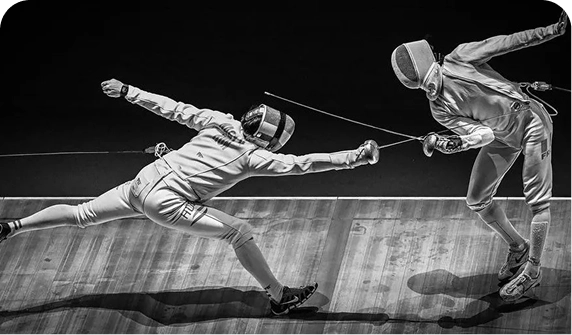
Fencing is a high-intensity exercise that demands peak physical conditioning, pushing athletes to the limits of endurance and strength. Every lunge, parry, and riposte exerts a certain level of strain on the muscles, particularly in the legs, arm, and core. As bouts progress, the cumulative effect of this physical exertion can lead to a profound sense of fatigue.
The constant need for focus, adaptability, and tactical awareness in fencing places big strain on the mind too. Maintaining mental sharpness becomes increasingly challenging as fatigue takes its toll, amplifying the mental demands of the sport.
Recognizing the signs of fatigue is the first step towards effective recovery. Hydration, nutrition, an adequate warm-up pre competition and rest between bouts are paramount. Additionally, integrating recovery techniques such as mobility and massage into one’s routine can help alleviate muscle soreness and promote faster recovery.