
Building Performance Between Sessions
Recovery is one of the most underestimated components of fencing performance. Many athletes focus on intensity, volume and technical repetition, but adaptation only occurs when the body is given the opportunity to rebuild. Recovery is not the absence of training. It is a structured process that allows strength, speed and coordination to improve over time.
Every intense session creates mechanical and neurological stress. Muscle fibres experience microdamage, energy stores are depleted and the nervous system becomes fatigued. In fencing, repeated accelerations, decelerations and long competition days amplify this stress. Without adequate recovery, fatigue accumulates, reaction time slows and movement quality deteriorates. Over time, injury risk increases.
Sleep is the most powerful recovery tool available. Consistent sleep of seven to nine hours supports hormonal balance, tissue repair and cognitive sharpness. Reaction time and decision-making, both critical in fencing, are highly sensitive to sleep restriction. Irregular schedules, travel and late competitions can disrupt circadian rhythm, delaying recovery even when total sleep time appears adequate. Maintaining regular sleep and wake times wherever possible should be a priority throughout the season.
Nutrition and hydration underpin physical repair. After training or competition, carbohydrate intake restores glycogen stores while protein supports muscle repair. Delaying post-session nutrition slows this process. Hydration is equally important, particularly during multi-bout competitions where concentration and coordination decline with dehydration. Consistent intake across the day is more effective than attempting to rehydrate only during training.
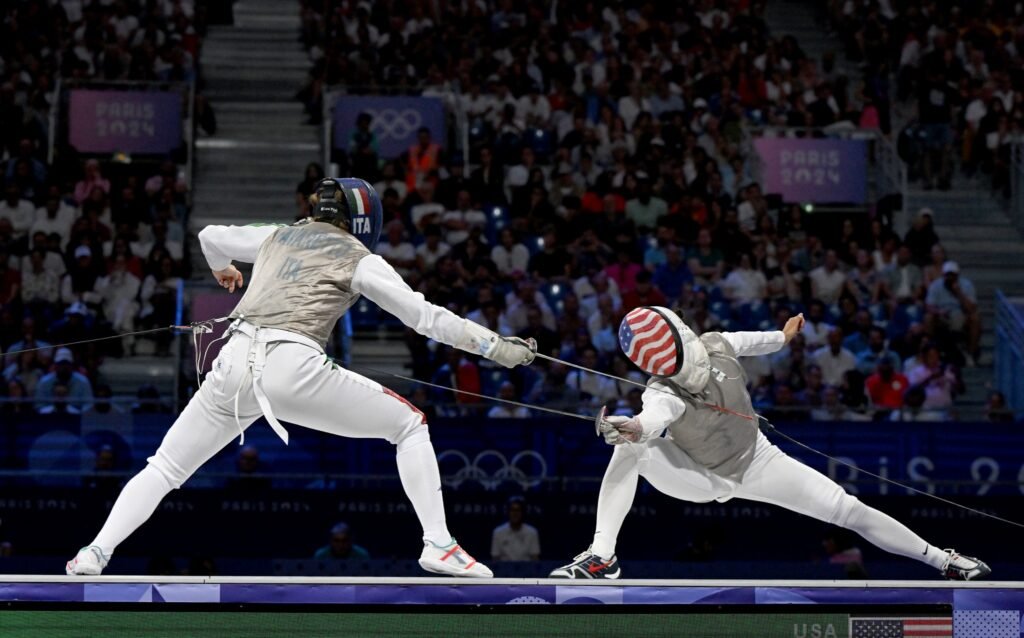
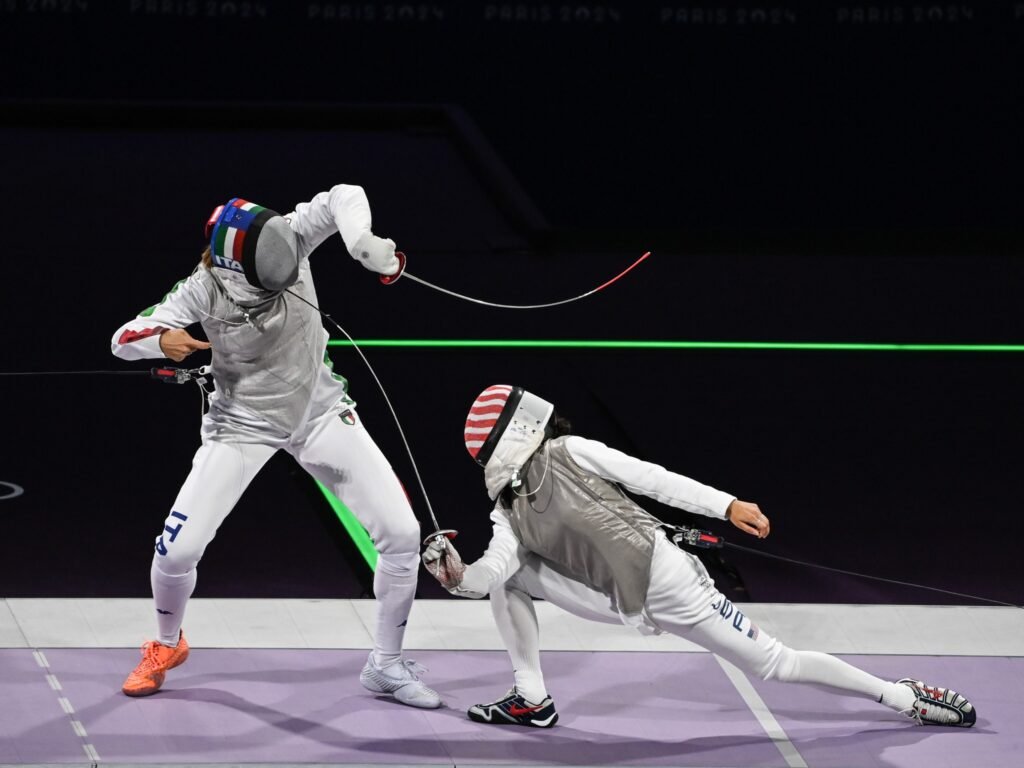
Active recovery supports circulation and maintains movement quality. Light aerobic work, mobility drills for the hips, ankles and thoracic spine, and low-intensity technical footwork help reduce stiffness after demanding sessions. Fencing’s asymmetrical nature makes this particularly important, as repeated lunges and directional changes can restrict range of motion if not addressed regularly.
Load management remains central to effective recovery. Structured variation in training intensity across the week allows adaptation without chronic fatigue. At least one full rest day during high-volume periods is not a weakness in programming but a requirement for sustained progression. Monitoring simple markers such as perceived fatigue, sleep quality and motivation can provide early signals when load should be adjusted.
Travel and competition periods require additional planning. Long days, irregular meals and disrupted sleep can quickly erode readiness. Prioritising hydration, light movement during travel and a gradual return to full training load after competition helps reduce accumulated fatigue.
Recovery modalities such as cold-water immersion, compression garments or massage may offer small short-term benefits in perceived soreness, but they are secondary to the fundamentals. Sleep, nutrition and appropriate load planning have far greater impact.
Recovery is performance preparation in disguise. When fencers consistently manage sleep, nutrition, mobility and training load, they create the conditions for technical and physical qualities to express fully on the piste. Availability and freshness are competitive advantages. Structured recovery ensures they are maintained across the entire season.